Facebook
 X
 Pinterest
 Copy Link
Haunted Houses and Hidden Stigmas: Halloween Real Estate in Orleans

Every October, Orleans residents decorate their porches with cobwebs and carved pumpkins, turning ordinary homes into spooky showpieces for the season. But beyond the seasonal fun, Orleans has its share of homes with real, lingering reputations—houses buyers whisper about long after Halloween decorations come down. These are known as stigmatized properties, and they raise genuine questions for anyone buying or selling in the local market.
Understanding what makes a property “stigmatized,” how that status affects value, and how to navigate a sale or purchase can save buyers and sellers alike from costly surprises. Marc-Andre Perrier, a Century 21 real estate agent serving Orleans, has guided clients through exactly these situations, and his insights shed light on a topic most listings don’t mention outright.
What Makes a House “Haunted”?
A house doesn’t need a ghost story to earn a spooky reputation. Often, it’s a combination of age, architecture, and local lore. Orleans has plenty of century-old homes with creaky floors, narrow staircases, and dim basements—features that fuel neighborhood legends regardless of what actually happened inside.
Sometimes the reputation stems from a genuine event: a death, a crime, or a tragedy tied to the property. Other times, it’s simply a house that’s sat vacant too long, with overgrown landscaping and boarded windows doing the rest of the storytelling. Either way, perception matters as much as fact when it comes to how buyers view a home.
Stigmatized Properties: What You Need to Know
In real estate terms, a “stigmatized property” is a home that may be undesirable to buyers for reasons unrelated to its physical condition. This can include a death on the premises, a notorious former occupant, or even rumors of paranormal activity. Ontario law doesn’t always require sellers to disclose these details unless specifically asked, which makes working with an informed agent essential.
Marc-Andre Perrier explains that transparency builds trust, even when disclosure isn’t legally mandatory. Buyers in Orleans deserve to make informed decisions, and sellers benefit when expectations are set clearly from the start. Avoiding awkward conversations can lead to bigger problems later, including deals falling through after buyers discover property history on their own.
How Stigmas Affect Home Values in Orleans
Stigmatized properties don’t automatically lose significant value, but they often take longer to sell. Buyers may hesitate, negotiate harder, or simply pass on a listing if they’re uncomfortable with its history. In a competitive market like Orleans, where move-in-ready homes attract multiple offers quickly, a stigmatized property can sit on the market far longer than comparable homes nearby.
Pricing strategy becomes critical in these cases. Price too high, and the home lingers unsold while rumors spread further. Price it right, accounting for buyer hesitation, and it attracts interest from buyers who care more about location and value than local legend. This is where local expertise, like that of Marc-Andre Perrier, becomes especially valuable: knowing the Orleans market well enough to price accurately despite a property’s reputation.
Buying or Selling a Stigmatized Property
For sellers, the key is honesty paired with strategic marketing. Highlighting a home’s strengths—its lot size, renovations, or proximity to Orleans amenities—can shift buyer focus away from its history. A knowledgeable agent can also help identify the right buyer pool: those drawn to character homes, investment opportunities, or simply a good deal in a sought-after neighborhood.
For buyers, approaching a stigmatized property with the right questions can turn a hesitant purchase into a smart one. Asking directly about a home’s history, requesting inspection reports, and understanding comparable sale prices all help clarify whether the stigma is worth the savings. Sometimes, a lower price for a home with an interesting backstory is simply good value.
Marc-Andre Perrier, Century 21 Real Estate Agent – Your Orleans Expert
Navigating stigmatized properties requires more than general real estate knowledge. It requires someone who understands Orleans specifically: its neighborhoods, its history, and the nuances that shape buyer behavior locally. Marc-Andre Perrier, a Century 21 real estate agent, brings exactly that depth of local insight to every transaction.
Whether helping a seller present a historic home honestly and effectively, or guiding a buyer through due diligence on a property with a story attached, Marc-Andre Perrier focuses on clear communication and realistic pricing. That approach helps clients avoid surprises and make confident decisions, whether they’re drawn to Orleans for its charm or its value.
Making Peace with a Property’s Past
Halloween may put haunted houses in the spotlight, but stigmatized properties are a year-round reality in real estate. Orleans buyers and sellers who understand what drives a home’s reputation, and how that reputation affects value, are better equipped to make smart decisions.
If you’re considering buying or selling a property in Orleans, whether it comes with a story or not, working with a local expert like Marc-Andre Perrier ensures you have the guidance needed to move forward with confidence.
Finding Home in Orleans: A House Hunting Story with Marc-André Perrier

House hunting in Orleans, Ontario becomes far less overwhelming with a knowledgeable local guide. Working with Marc-André Perrier of Century 21 turned a daunting search into a focused, rewarding experience—one that led to the right home in the right neighbourhood, without the usual guesswork.
A fictional tale but typical house hunting experience.
The first time I drove into Orleans, I didn’t know a single street name. I’d heard the suburb praised for its family-friendly parks, its proximity to the Ottawa River, and its mix of established neighbourhoods and newer developments. But hearing about a place and understanding it well enough to buy a home there are two very different things. That gap is exactly why I called Marc-André Perrier, a realtor with Century 21 who has spent years working and living the Orleans market.
What started as a cautious phone call turned into a full day of house hunting that reshaped how I thought about moving. This is the story of that trip, and why having the right realtor made all the difference.
Starting with a Conversation, Not a Listing
Before Marc-André showed me a single property, he asked questions. Lots of them. What did my daily commute look like? Did I want a backyard big enough for a dog to run in? Was I open to an older home with character, or did I want something move-in ready?
It would have been easy to skip this step and jump straight into browsing listings online. Instead, Marc-André treated the conversation as the foundation of the entire search. He explained that Orleans isn’t one neighborhood—it’s a patchwork of distinct communities, from the mature trees of Convent Glen to the newer builds near Avalon and Fallingbrook. Choosing the right area mattered just as much as choosing the right house.
By the time we got ready to see homes, he had already narrowed down six homes worth seeing, each one chosen because it matched something specific I’d said, not just because it was available.
Walking Through Orleans, One Street at a Time
Our first stop was a bungalow near Place d’Orléans, close enough to shopping and transit that I could picture skipping the car some mornings. Marc-André pointed out details I wouldn’t have noticed on my own: the direction the kitchen windows faced, how the basement had been finished to meet current building standards, and how the street’s traffic patterns would affect noise levels during school pickup hours.
At the second home, a two-story in Fallingbrook, he was candid about a drawback. The lot backed onto a busier road, and while the interior was beautiful, he didn’t want me to fall in love with the finishes and overlook the location. That honesty stood out. A realtor who only highlights the positives isn’t doing his job. Marc-André pointed out trade-offs at every stop, which made it easier to trust his opinion when he was enthusiastic about a property.
By the fourth house, a brick two-story close to Petrie Island, something shifted. The layout felt right. The backyard had mature trees. The street was quiet but still a short drive from the highway. Marc-André let me walk through it twice without rushing, and when I asked about the neighbourhood’s resale trends, he had answers ready, not guesses.
Why Local Knowledge Changes Everything
Choose a realtor who knows the specific streets you’re considering if local nuance matters more to you than a bigger brand name. That’s the lesson this trip reinforced. Orleans has its own rhythms: school catchment boundaries that shift block by block, seasonal flooding concerns near the river that aren’t always obvious from a listing photo, and a steady demand for homes near the LRT extension that affects pricing more than people expect.
Marc-André’s familiarity with these details meant fewer surprises. When we toured a home near the Trim Road LRT station, he mentioned that properties in that pocket had seen stronger appreciation over the past two years due to future transit access. That’s the kind of insight that doesn’t show up in an online listing but directly affects whether a purchase makes sense long-term.
Making the Decision
By the end of the day, the choice came down to two homes. Marc-André didn’t push either direction. Instead, he laid out the practical differences: one had a larger lot but would need a new roof within a few years, the other was slightly smaller but came with recent renovations and lower projected maintenance costs. He framed it clearly: choose the larger lot if long-term outdoor space matters more than upfront renovation costs, or choose the renovated home if near-term peace of mind is the priority.
That kind of clarity, presented without pressure, made the decision feel manageable rather than overwhelming. I ended up choosing the two-story near Petrie Island, the one that had felt right from the first walkthrough.
What This Trip Taught Me About Moving to Orleans
House hunting is rarely just about square footage and price tags. It’s about understanding a community well enough to know where you’ll actually be happy. Working with Marc-André Perrier made that understanding possible in a single day, something that could have taken weeks of solo research and second-guessing.
If you’re considering a move to Orleans, the biggest advantage isn’t finding a long list of listings. It’s finding someone who can help you interpret what those listings mean for your specific life. That’s what turned my house hunting trip from a stressful logistics exercise into a genuinely exciting step toward a new home.
Frequently Asked Questions
What makes Orleans, Ontario a good place to buy a home?
Orleans offers a mix of established and newer neighborhoods, proximity to the Ottawa River, strong school options, and growing transit access through the LRT extension, making it appealing for families and commuters alike.
How long does a typical house hunting trip take in Orleans?
A focused trip with a knowledgeable local realtor, like the one described here with Marc-André Perrier, can realistically cover five to six properties in a single day, especially when the realtor has already narrowed choices based on your priorities.
Why does local realtor knowledge matter when buying in Orleans?
Orleans has neighborhood-specific factors, such as school catchment boundaries, flood-prone areas near the river, and pricing shifts tied to transit access, that aren’t always visible in online listings. A realtor familiar with these details helps buyers avoid costly surprises.
What should I ask a realtor before starting a house hunt?
Clarify your must-haves (commute distance, outdoor space, home age and condition) early. A good realtor, like Marc-André Perrier of Century 21, will use these answers to filter listings before you even start touring.
Is it better to choose a renovated home or one with a larger lot?
Choose a larger lot if long-term outdoor space and future customization matter most to you. Choose a renovated home if minimizing near-term maintenance costs and move-in readiness are higher priorities.
Contact Marc-Andre Perrier Orleans Real Estate Agent with Century 21 to plan your house hunting trip today!
Ontario’s LTB Changes: What Orleans Landlords and Tenants Must Know

Starting September 21, 2026, Ontario’s Landlord and Tenant Board (LTB) rolled out major changes affecting evictions, late payments, and hearing rights. Key updates include a shorter N4 notice period (7 days instead of 14), a formal definition of persistent late payment, and new requirements for N12 and N13 notices. Orleans landlords and tenants should review these changes carefully—or consult a local expert—before their next lease dispute or renewal.
Ontario’s rental landscape shifted significantly on September 21, 2026, when the Landlord and Tenant Board introduced a sweeping set of operational changes. According to Tribunals Ontario’s September 21, 2026 operational update, these revisions touch nearly every stage of the landlord-tenant relationship, from non-payment notices to eviction procedures.
For landlords and tenants in Orleans, Ontario, these changes carry real consequences. Whether you’re managing a rental property or renting your first apartment, understanding these new rules can save you time, money, and legal headaches. Below, we break down the six most important changes and what they mean for you.
The N4 Notice Period Just Got Shorter
Previously, landlords issuing an N4 notice for non-payment of rent had to give tenants 14 days to pay before proceeding with eviction. As of September 21, 2026, that window has been cut to 7 days.
This change speeds up the eviction process considerably for landlords dealing with non-paying tenants. For tenants, it means less time to catch up on missed rent before facing formal eviction proceedings. Orleans renters should treat any N4 notice with urgency, since the response window is now half as long as before.
Persistent Late Payment Now Has a Formal Definition
The LTB has introduced a clear, formal definition of “persistent late payment”: paying rent more than 7 days late on three or more occasions within a 6-month period. Previously, this determination was more subjective and left to case-by-case interpretation.
This new standard gives landlords a concrete threshold for pursuing eviction based on repeated late payments. Tenants who’ve struggled with timing—even for minor delays—should be aware that a pattern of lateness can now trigger formal consequences more predictably than before.
Tenants Must Pay 50% of Arrears to Raise Issues at Hearing
Under the updated rules, tenants facing eviction for unpaid rent must pay 50% of their rent arrears before they can raise other issues at their LTB hearing. This change effectively narrows the scope of what tenants can contest unless they meet this financial threshold first.
This is a significant shift. Tenants who might have relied on raising maintenance complaints or other disputes as part of their defense will now need to address the arrears balance first, at least in part.
N12 Notices No Longer Require Compensation With 120+ Days Notice
N12 notices—used when a landlord or their family member intends to move into the rental unit—traditionally required compensation to the tenant. Under the new rules, landlords who provide 120 or more days of notice are exempt from this compensation requirement.
This gives landlords more flexibility when planning long-term occupancy changes, provided they communicate well in advance. Tenants receiving an N12 notice should check the notice period carefully, since it directly affects their compensation eligibility.
The 60-Day Occupancy Rule After N12 Eviction
To close a loophole that allowed some landlords to misuse N12 evictions, the LTB now requires the landlord or their family member to occupy the unit within 60 days of the tenant vacating. Failing to meet this timeline creates a presumption of bad faith, which can expose landlords to penalties.
This change protects tenants from bad-faith evictions while holding landlords accountable to their stated intentions. Orleans landlords planning an N12 eviction should have a clear, documented occupancy plan ready.
N13 Notices: Updated Right of First Refusal
N13 notices, used for renovations or demolitions, now come with reinforced tenant protections. Tenants have a right of first refusal to return to the unit once work is complete, and landlords face updated obligations to formally offer this option.
CBC News coverage of the changes noted that this update aims to prevent tenants from being permanently displaced under the guise of renovation. Landlords conducting an N13 eviction must clearly document and honor this right or risk challenges at the LTB.
What This Means for Orleans Landlords and Tenants
These changes reshape the timeline and requirements for nearly every major LTB process. Landlords in Orleans need to update their notice templates, adjust their eviction timelines, and prepare documentation that reflects the new occupancy and compensation rules. Tenants need to respond faster to N4 notices and understand new financial obligations tied to hearings.
One important deadline to note: previous LTB forms will no longer be accepted after November 30, 2026. Anyone currently using older forms should transition to updated versions well before that date to avoid processing delays.
Why Talk to Marc-Andre Perrier About These Changes
Navigating these new rules alone can be overwhelming, especially with deadlines like the November 30, 2026 form cutoff approaching fast. Marc-Andre Perrier, Orleans Real Estate Agent, brings local expertise to help landlords and tenants understand exactly how these changes affect their specific situation.
Whether you’re a landlord adjusting your rental agreements or a tenant trying to understand your new rights, reaching out to Marc-Andre Perrier can help you avoid costly missteps during this transition period.
Take Action Before the November 30 Deadline
Ontario’s September 2026 LTB changes bring real consequences for how landlords and tenants handle non-payment, evictions, and hearings. With new deadlines and requirements already in effect, waiting to understand these rules isn’t a safe option.
Contact Marc-Andre Perrier, Orleans Real Estate Agent, today to get expert guidance tailored to your situation, and make sure you’re fully prepared before the November 30, 2026 form deadline arrives.
Frequently Asked Questions
How much notice do landlords need to give for non-payment of rent under the new rules?
Landlords must issue an N4 notice, which now gives tenants 7 days to pay overdue rent, down from the previous 14-day period.
What counts as persistent late payment under the new LTB definition?
Persistent late payment is now formally defined as paying rent more than 7 days late on three or more occasions within a 6-month period.
Can tenants raise other issues at their LTB hearing if they owe rent?
Tenants must pay 50% of their rent arrears before they can raise additional issues at their hearing, according to the September 2026 update.
Do landlords still need to compensate tenants for N12 evictions?
Landlords are exempt from compensation requirements if they provide 120 or more days of notice under an N12 notice.
What happens if a landlord doesn’t move in within 60 days after an N12 eviction?
Failing to occupy the unit within 60 days creates a presumption of bad faith, which can result in penalties for the landlord.
When do old LTB forms stop being accepted?
Previous LTB forms will no longer be accepted after November 30, 2026, so landlords and tenants should switch to updated forms as soon as possible.
Back to School in Orleans: Why Your School District Should Drive Your Home Search

Buying a home in the right school district can significantly impact your children’s education and your property’s long-term value. In Orleans, Ontario, families have access to strong French and English schools across both Catholic and public boards. Orleans-based Century 21 real estate agent Marc-Andre Perrier helps families find homes that align with their school district priorities.
Every August, the same question surfaces in family group chats and neighborhood Facebook groups across Orleans: “Is that school any good?” But by the time most families are asking that question, they’ve already signed a mortgage.
School districts are one of the most overlooked factors in home buying—and one of the most consequential. The right choice shapes your child’s friendships, their commute, their extracurriculars, and their academic trajectory for years. Get it wrong, and you may find yourself navigating boundary exemption requests or paying for private tutoring to fill the gaps.
For families moving to or within Orleans, Ontario, the good news is that the community is home to a wide range of well-regarded schools. The challenge is knowing which ones fall within reach of which neighborhoods—and that’s where local expertise becomes essential.
What Makes Orleans, Ontario a Strong Choice for Families?
Orleans is a suburban community in the east end of Ottawa with a distinctly family-friendly character. Tree-lined streets, parks, recreational facilities, and a bilingual population make it one of the most sought-after areas for young families in the Ottawa region.
The area is served by four school boards:
- Ottawa-Carleton District School Board (OCDSB) — English public
- Ottawa Catholic School Board (OCSB) — English Catholic
- Conseil des écoles publiques de l’Est de l’Ontario (CEPEO) — French public
- Conseil des écoles catholiques du Centre-Est (CECCE) — French Catholic
This variety gives Orleans families meaningful flexibility, whether they’re looking for French immersion programs, faith-based education, or specialized academic pathways. Schools like Cairine Wilson Secondary School, Académie de la Moraine, and Holy Trinity Catholic High School each serve different parts of the community—and each falls within specific geographic boundaries tied to your home address.
How School District Boundaries Affect Property Values
The relationship between school districts and real estate values is well-documented. Homes located within the boundaries of high-performing schools consistently attract more buyer competition, which drives up prices and supports long-term property appreciation.
This dynamic plays out in Orleans just as it does in cities across North America. A home on one side of a boundary street may offer access to a highly regarded school, while the home directly across the road feeds into a different one. For families prioritizing education, that distinction matters—and it’s reflected in what buyers are willing to pay.
Beyond resale value, living within the right district eliminates the need for out-of-boundary enrollment requests, which are never guaranteed and often depend on available space. Buying in the right area from the start removes that uncertainty entirely.
What to Look for When Buying in a School District
Not all “good schools” look the same on paper, and families have different priorities. Here are the key factors worth researching before committing to a neighborhood:
Academic programs and pathways. Does the school offer French immersion, advanced academics, arts, or technical programs? Some specialized programs are only available at select schools within a board.
School capacity and growth. Orleans has experienced significant population growth over the past decade. Some schools are at or near capacity, which can affect class sizes, program availability, and overall experience.
Feeder schools. Elementary school choices have downstream effects. Understanding which high schools a given elementary feeds into helps families plan further ahead.
Commute and walkability. A school that requires a long bus ride every day affects a child’s schedule, sleep, and energy. Proximity matters more than it might seem.
Extracurricular offerings. Sports teams, music programs, clubs, and leadership opportunities vary significantly from school to school. If these matter to your family, factor them in.
Why Working with a Local Orleans Real Estate Agent Makes a Difference
School district boundaries are not always intuitive. They don’t follow major roads consistently, they shift occasionally as neighborhoods grow, and they differ between boards—meaning a French public school boundary and an English Catholic boundary may cut through the same block in completely different ways.
This is where working with a local expert like Marc-Andre Perrier, a real estate agent with Century 21 based in Orleans, becomes a genuine advantage. Marc-Andre has deep knowledge of Orleans neighborhoods and understands how school district boundaries map onto the local housing market. For families who have a specific school or board in mind, he can help focus the home search on properties that actually fall within the right catchment area—saving time, avoiding disappointment, and ensuring that the home you buy delivers on what matters most.
Rather than discovering after the fact that a home falls outside the desired boundary, families working with Marc-Andre can make district access a non-negotiable filter from the very beginning of their search.
Timing Your Move Around the School Year
If you’re planning a move with school-aged children, timing is worth thinking through carefully. The back-to-school period—late August through September—is one of the busiest stretches for Orleans families navigating new neighborhoods and school registrations simultaneously.
Starting your home search earlier in the spring or summer gives you more runway. You’ll have time to visit neighborhoods, research schools, confirm boundaries with the relevant school board, and complete a purchase before September enrollment deadlines arrive. A move that closes in late July or early August also gives children a few weeks to settle in before the school year begins—a meaningful transition advantage.
Making the Right Move for Your Family
Choosing where to live and where your children go to school are two of the biggest decisions a family makes. In Orleans, those decisions are deeply connected. The community offers genuine options across multiple school boards and educational philosophies, but navigating those options requires on-the-ground knowledge that goes beyond a quick Google search.
Marc-Andre Perrier and the Century 21 team are well-positioned to help Orleans families find homes that check every box—including the ones that show up on report cards years down the road. If you’re planning a move and want to make sure you land in the right school district, reaching out to a local specialist is the most reliable first step you can take.
Frequently Asked Questions
How do I find out which school district a home in Orleans falls under?
Each school board in Ottawa maintains an online school locator tool where you can enter a home address to confirm which school it feeds into. Because boundaries differ between boards, you’ll need to check separately for each (OCDSB, OCSB, CEPEO, and CECCE).
Can I enroll my child in a school outside our boundary in Orleans?
Out-of-boundary enrollment is possible but not guaranteed. Approval depends on available space at the school and is decided by the school board. Buying within the desired boundary is the only way to guarantee access.
Does buying in a better school district increase my home’s resale value?
Generally, yes. Homes in sought-after school catchments tend to attract more buyers and sustain stronger resale values over time, though the effect varies by neighborhood and market conditions.
How can Marc-Andre Perrier help me find a home in the right Orleans school district?
Marc-Andre Perrier is a Century 21 real estate agent based in Orleans with local expertise in neighborhood boundaries and school catchment areas. He can help focus your search on homes that fall within your preferred district from the start of the process.
What are the main school boards serving Orleans, Ontario?
Orleans is served by four boards: the Ottawa-Carleton District School Board (English public), the Ottawa Catholic School Board (English Catholic), the CEPEO (French public), and the CECCE (French Catholic).
Why Orléans, Ontario Should Be Your Next Home
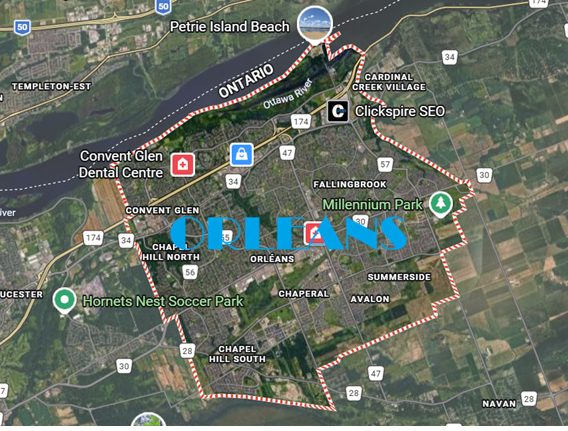
Quick answer: Orléans is a vibrant, bilingual suburb of Ottawa offering excellent schools, abundant green space, a growing real estate market, and easy access to downtown Ottawa—making it one of Eastern Ontario’s most desirable communities for families, professionals, and retirees alike.
Tucked along the eastern edge of Ottawa, Orléans, Ontario has quietly earned a reputation as one of the most livable communities in the National Capital Region. It has the energy of a city and the warmth of a small town—a rare combination that keeps drawing new residents year after year.
But “livable” doesn’t quite do it justice. Orléans offers top-ranked schools, an impressive network of parks and trails, a booming local food scene, and a strong sense of community identity rooted in its rich French-Canadian heritage. For families relocating from Toronto, Montreal, or even within Ottawa itself, Orléans consistently ranks as a top destination.
This guide covers everything you need to know about living in Orléans—from neighbourhood highlights and recreation options to real estate trends and commuting realities. By the end, you’ll have a clear picture of whether Orléans is the right fit for your next chapter.
A Thriving Community: What Makes Orléans a Great Place to Live?
Orléans is more than a suburb—it’s a fully self-contained community with its own distinct personality. Originally a small Franco-Ontarian village, it has grown significantly since amalgamating with the City of Ottawa in 2001. Today, it’s home to over 130,000 residents and continues to grow at a steady pace.
What makes Orléans stand out is its strong bilingual character. English and French coexist naturally here, which is a significant draw for francophone families and those seeking French-language education for their children. Community events, local businesses, and public services all reflect this dual identity.
The neighbourhoods within Orléans each have their own appeal. Chapel Hill and Avalon are popular with young families for their newer builds and proximity to schools. Fallingbrook and Cardinal Creek attract those looking for established, tree-lined streets. Queenswood Heights and Convent Glen appeal to buyers seeking affordability without sacrificing location. No matter your preference, there’s a corner of Orléans that will feel like home.
Top Reasons to Move to Orléans, Ontario
Before diving into the specifics, here’s a high-level look at why so many people are choosing Orléans:
- Affordable housing relative to central Ottawa and other major Canadian cities
- Excellent public and Catholic school options, including French-language institutions
- Safe, walkable neighbourhoods with strong community associations
- Easy access to downtown Ottawa via Highway 174 and OC Transpo
- Abundant green space, including trails along the Ottawa River
- A growing local economy with retail, dining, and commercial development along Innes Road and St. Joseph Boulevard
Schools & Education in Orléans
For families with children, the quality of local schools is often the deciding factor in a move. Orléans delivers on this front. The community is served by four school boards—the Ottawa-Carleton District School Board (OCDSB), the Ottawa Catholic School Board (OCSB), the Conseil des écoles publiques de l’Est de l’Ontario (CEPEO), and the Conseil des écoles catholiques du Centre-Est (CECCE)—giving families an unusually broad range of educational options.
French immersion programs are widely available, and several schools in the area consistently receive strong community feedback for their programming and facilities. Post-secondary options are accessible nearby as well, with the University of Ottawa and Algonquin College both reachable within 30 minutes.
For parents, this depth of choice is one of Orléans’ most compelling selling points.
Parks, Recreation & Outdoor Activities in Orléans
Green space is woven into the fabric of Orléans. The community sits close to the Ottawa River, and residents benefit from the extensive trail network that runs along its shoreline. The Prescott-Russell Recreational Trail connects Orléans to communities further east, making it a popular route for cyclists and walkers alike.
Petrie Island Beach and Marina is a local gem—a sandy beach on the Ottawa River that offers swimming, kayaking, and paddleboarding during the warmer months. It’s one of the few urban beach experiences available anywhere near Ottawa, and residents of Orléans have it essentially in their backyard.
Beyond that, Orléans is home to numerous community parks, soccer fields, hockey arenas, and splash pads. The Ray Friel Recreation Complex and the Orléans Recreation Complex serve as central hubs for fitness and community programming. Whether you’re into hockey, swimming, fitness classes, or simply taking a morning run through a well-maintained park, Orléans has the infrastructure to support an active lifestyle.
Shopping, Dining & Entertainment in Orléans
Gone are the days when Orléans residents had to drive into central Ottawa for a decent dinner or a shopping trip. The community has developed a robust local economy, centered largely around St. Joseph Boulevard and Innes Road.
Place d’Orléans Shopping Centre anchors the retail scene, featuring major Canadian retailers alongside specialty shops and services. The surrounding area has seen significant commercial growth, with new restaurants, cafés, and entertainment venues opening regularly.
The dining scene deserves special mention. Orléans has a growing number of independently owned restaurants serving everything from traditional Québécois cuisine to contemporary fusion. Craft breweries and specialty coffee shops have also taken hold, giving the community a distinct food culture that continues to evolve.
For entertainment, Orléans residents are also just a short drive from downtown Ottawa’s cultural institutions—the National Gallery of Canada, the Canadian Museum of History (just across the river in Gatineau), the National Arts Centre, and a full calendar of festivals throughout the year.
Commuting & Accessibility: Getting Around from Orléans
One of the most common questions prospective residents ask is: How difficult is the commute from Orléans to downtown Ottawa?
The honest answer: it depends on your mode of transport. By car, the drive along Highway 174 typically takes 25 to 40 minutes during peak hours—manageable, though not without traffic. OC Transpo operates frequent bus service along several routes connecting Orléans to the broader Ottawa transit network, including rapid transit connections.
Ottawa’s LRT expansion is also extending eastward, with future stations planned to improve transit access to Orléans significantly. Once complete, this infrastructure investment will make car-free commuting a much more practical reality for Orléans residents.
For those who cycle, the multi-use pathways connecting Orléans to Ottawa’s core are well-maintained and scenic, making active commuting a genuine option during the warmer months.
The Orléans Real Estate Market: What Buyers Should Know
Orléans offers some of the most competitive real estate value in the Ottawa region. While prices have risen across the board in recent years—reflecting broader national trends—Orléans remains more affordable than many comparable communities closer to Ottawa’s urban core.
The housing stock in Orléans is diverse. Buyers will find single-detached homes, semi-detached properties, townhomes, and condominium units at a range of price points. Newer developments in areas like Avalon and Notting Hill offer modern builds with contemporary finishes, while established neighbourhoods like Beacon Hill North and Queenswood Heights provide mature lots and larger homes with character.
Demand in Orléans remains strong, particularly from young families and first-time buyers priced out of Ottawa’s more central neighbourhoods. This sustained demand supports property values over time, making Orléans not just a great place to live—but a sound long-term investment.
For buyers navigating this market, working with a knowledgeable local real estate agent is essential. Inventory moves quickly, and understanding the nuances of each neighbourhood can make the difference between finding the right home and settling for the wrong one.
Why Work with Marc-Andre Perrier When Buying in Orléans
Orléans is a competitive market, and having the right representation matters. Marc-Andre Perrier is an experienced Orléans real estate agent with deep roots in the community and a track record of helping buyers find homes that genuinely fit their needs and budgets.
Marc-Andre’s advantage isn’t just local knowledge—it’s the combination of market insight, negotiation experience, and genuine investment in his clients’ outcomes. He understands the differences between Orléans’ many neighbourhoods, knows which developments are worth watching, and can guide first-time buyers and experienced investors alike through every step of the process.
Whether you’re relocating from across the country or moving from another part of Ottawa, working with a specialist who knows Orléans inside and out gives you a real edge in a fast-moving market.
Ready to Make Orléans Home?
Orléans, Ontario offers a quality of life that’s hard to match—strong schools, beautiful green space, a growing food and retail scene, and a genuine sense of community that larger urban centres often struggle to replicate. It combines the convenience of city living with the warmth of a neighbourhood where people actually know their neighbours.
If you’re seriously considering a move to Orléans, the next step is simple: connect with Marc-Andre Perrier. As a dedicated Orléans real estate agent, Marc-Andre can help you find the right home in the right neighbourhood at the right price. Reach out today and take the first step toward making Orléans your next home.
Frequently Asked Questions About Living in Orléans, Ontario
Is Orléans a good place to raise a family?
Yes. Orléans is widely regarded as one of the best family-friendly communities in the Ottawa region, thanks to its strong school system, safe neighbourhoods, abundant parks, and community-focused atmosphere.
How far is Orléans from downtown Ottawa?
Orléans is approximately 20 to 30 kilometers east of downtown Ottawa. By car, the commute typically takes 25 to 40 minutes during peak hours. OC Transpo bus routes connect the community to Ottawa’s rapid transit network.
Is Orléans bilingual?
Yes. Orléans has a strong Franco-Ontarian heritage and is one of the most bilingual communities in Ottawa. French and English are both widely spoken, and French-language schools are available through both public and Catholic school boards.
What is the average home price in Orléans, Ontario?
Home prices in Orléans vary by property type and neighbourhood. Single-detached homes, townhomes, and condominiums are all available across a range of price points. Orléans generally offers better value than many comparable Ottawa neighbourhoods closer to the urban core.
Who is Marc-Andre Perrier?
Marc-Andre Perrier is a real estate agent specializing in Orléans, Ontario. He helps buyers navigate the local housing market, offering neighbourhood expertise, market knowledge, and personalized guidance throughout the purchasing process.
What are the best neighbourhoods in Orléans for first-time buyers?
First-time buyers often find good value in neighbourhoods like Avalon, Chapel Hill South, and Notting Hill, which offer newer builds and competitive pricing. Established areas like Fallingbrook and Queenswood Heights are worth considering for those seeking larger lots and mature streetscapes.
What a Balanced Market Means for Buyers and Sellers in Orléans

What a Balanced Market Means for Buyers and Sellers in Orléans
Quick answer: A balanced real estate market—where neither buyers nor sellers have the upper hand—is what Orléans, Ontario is experiencing in 2026. With a sales-to-new-listings ratio hovering near 48% and months of inventory around 3.0, conditions are more measured than they’ve been in years. For both buyers and sellers, that shift creates real opportunity—if you know how to read it.
After years of a frenzied seller’s market followed by rate-driven hesitation, Ottawa’s real estate landscape has found its footing. Orléans, the bilingual suburban community on Ottawa’s east end, sits squarely in that stabilization. Prices are holding. Inventory has grown. And buyers are returning to the table with pre-approvals in hand.
But “balanced” doesn’t mean simple. The market still rewards preparation, local knowledge, and well-timed decisions. That’s where an experienced agent like Marc-Andre Perrier, Owner and Broker of Record at CENTURY 21 Action Power Team Ltd., makes all the difference.
What Does a Balanced Real Estate Market Actually Mean?
A balanced market occurs when housing supply and demand are roughly equal—neither overwhelmingly favouring buyers nor sellers. Industry professionals typically define this as a sales-to-new-listings ratio between 40% and 60%.
According to the Ottawa Real Estate Board (OREB), Ottawa’s May 2026 sales-to-new-listings ratio was 48.2%, with 3.0 months of inventory—both firmly within balanced territory. Average residential sale prices were $721,270, down just 0.9% year over year, while the median sale price was $660,000.
This isn’t a market in free fall. It isn’t a bidding war frenzy, either. It’s a market where thoughtful decision-making tends to win.
What Does Orléans’ Real Estate Market Look Like Right Now?
Orléans has long been one of Ottawa’s most sought-after communities for families. Its bilingual character, newer housing stock, and proximity to transit—including an upcoming LRT extension—continue to attract both first-time buyers and move-up purchasers.
Within the broader Ottawa market, the suburban east corridor (which includes Orléans) has seen prices hold relatively firm even as sales volume has slowed. OREB’s May 2026 data showed that while suburban east sales declined year over year, prices moved higher—a sign of underlying demand that hasn’t evaporated, just tempered.
The segment breakdown matters here. Single-family detached homes remain the most resilient property type, with an MLS® HPI benchmark price of $849,047 across Orléans and a months-of-inventory figure of 5 for June 2026. Townhomes sit at a similar 5 months, with an average sale price $590,449.
For Orléans specifically, this means townhomes and detached homes in the $500,000–$700,000 range are still moving with purpose. Well-priced listings don’t linger. Overpriced ones do.
What Does a Balanced Market Mean for Buyers in Orléans?
Buyers in Orléans haven’t had this much breathing room in years. More inventory means more choices. Less competition means more time to evaluate a property properly rather than scrambling to make a same-day offer.
Fixed mortgage rates have stabilized in the mid-4% range following the Bank of Canada’s series of cuts through late 2025, improving affordability compared to the peak rate environment of 2023–2024. More buyers can qualify, and those who do are finding well-rounded options across property types.
That said, balance doesn’t mean bargains everywhere. Desirable detached and townhome listings in Orléans are still attracting serious interest. If a property is priced accurately and presented well, expect competition. The time to act slowly is in the apartment segment; the time to move decisively is still very much in play for single-family homes.
Getting pre-approved before you start visiting open houses is essential. It signals seriousness to sellers, locks in your rate, and narrows your search to what’s actually achievable.
What Does a Balanced Market Mean for Sellers in Orléans?
Sellers are navigating a market that punishes wishful pricing and rewards realistic strategy. Active listings across Ottawa rose 12.2% year over year through May 2026, which means buyers have options—and they know it.
OREB President Tami Eades put it plainly: “May brought the seasonal increase in activity we typically expect to see in Ottawa’s housing market, but sales continue to trail last year’s pace.”
For Orléans sellers, this translates into a clear imperative: price your home accurately from day one. Listings that start too high tend to sit, accumulate days on market, and ultimately sell for less than homes that were priced strategically from the outset. Professional photography, home staging, and pre-listing inspections are no longer optional niceties—they’re standard expectations from buyers comparing multiple listings online before booking a single showing.
Timing matters, too. The spring and early summer months historically see the highest buyer activity in Ottawa. Listings that hit the market well-prepared and well-priced during peak periods consistently outperform those that don’t.
How Marc-Andre Perrier Can Help You Navigate Orléans’ Market
Whether you’re buying or selling in Orléans, local expertise is the differentiator.
Marc-Andre Perrier is the Owner and Broker of Record at CENTURY 21 Action Power Team Ltd., located at 1420 Youville Drive in Ottawa. With 10 years of experience and active listings throughout Orléans and the surrounding region, Marc-Andre brings deep familiarity with the community’s neighbourhoods, pricing trends, and buyer dynamics. He is fully bilingual, serving clients in both English and French.
His client reviews reflect what matters most in a balanced market: clear communication, honest guidance, and strong negotiating skills. “Marc-Andre demonstrated professionalism and expertise right from our initial meeting,” wrote one first-time buyer client. “He was proactive in keeping me updated and always responded promptly to any inquiries I had.” Another client, a first-time seller, noted that Marc-Andre was “excellent in negotiating and walking us through every aspect of the process.”
In a market where preparation and precision matter more than momentum, having a broker who takes the time to understand your specific situation—and tells you the truth about pricing and timing—is invaluable.
Make Your Move with Confidence
Orléans’ balanced market is not a reason to wait. It’s a reason to plan carefully and act with information on your side. Buyers have leverage they haven’t felt in years. Sellers who approach the market strategically are still achieving strong results. The conditions are genuinely constructive for both sides of the transaction.
What this market punishes is guesswork. What it rewards is working with someone who understands the data, knows the neighbourhood, and can translate both into a strategy built around your goals.
Marc-Andre Perrier is ready to help. Reach out through CENTURY 21 Action Power Team Ltd. at (613) 407-2100 or visit marcandre-perrier.c21.ca to get started.
Closing the Deal: What to Expect as a First-Time Buyer in Orleans

You found the perfect house, your offer was accepted, and you can already picture your furniture in the living room. The finish line is finally in sight. But before you get the keys to your new Orleans home, you need to navigate the closing process.
This final stretch involves several important steps, from signing legal paperwork to completing property inspections. For a first-time home buyer, these final weeks can feel a bit overwhelming. You might wonder what happens next and how to prepare for the big day.
We created this guide to walk you through exactly what to expect during the closing phase. You will learn how to finalize your mortgage, handle the home inspection, and manage your closing costs. Most importantly, you will see how working with a trusted local expert makes this entire experience completely stress-free.
Navigating the Home Inspection
Once your offer is accepted, the clock starts ticking on your conditions. For most buyers, the home inspection is the most critical hurdle. You need to hire a qualified, independent inspector to evaluate the property from top to bottom.
The inspector will check the foundation, roof, plumbing, electrical systems, and HVAC units. They look for hidden defects that might cost you money down the road. Expect this process to take a few hours, and you should definitely attend. It is a great opportunity to learn where important features, like the main water shut-off valve, are located.
If the inspection reveals major issues, you have a few options. You can ask the seller to fix the problems before closing. Alternatively, you can negotiate a lower purchase price so you can handle the repairs yourself. If the damage is too severe, you can even walk away from the deal entirely.
Finalizing Your Mortgage Approval
You likely secured a mortgage pre-approval before you started shopping. Now, your lender needs to officially approve the specific property you want to buy. Your lender will require a copy of the accepted Agreement of Purchase and Sale, as well as the property listing details.
The bank wants to ensure the house is actually worth the amount you agreed to pay. In some cases, they will order a professional home appraisal to confirm the property’s value. You will also need to provide updated financial documents. Be prepared to show your most recent pay stubs, bank statements, and employment letters.
During this period, avoid making any major financial changes. Do not quit your job, finance a new car, or apply for new credit cards. Any sudden changes to your credit score or debt levels can cause the lender to revoke your mortgage approval.
Understanding Your Closing Costs
As you prepare for closing day, you need to have your funds fully organized. Your down payment is only one part of the financial equation. You must also pay closing costs, which are the final fees required to legally transfer the property into your name.
Typically, you should budget between 1.5% and 4% of the purchase price for these expenses. Your main costs will include real estate lawyer fees, title insurance, and provincial land transfer taxes. Fortunately, as a first-time buyer in Ontario, you often qualify for a land transfer tax rebate that significantly lowers this bill.
Your real estate lawyer will calculate the exact amount you owe. They will ask you to bring a certified cheque or arrange a bank draft a few days before closing. This single payment will cover your remaining down payment and all associated closing fees.
How Marc-Andre Perrier Protects Your Purchase
Managing inspectors, lenders, and lawyers takes a lot of coordination. You do not have to handle these stressful details by yourself. This is exactly where Marc-Andre Perrier steps in to protect your investment.
As a highly respected Realtor with Century 21, Marc-Andre specializes in guiding Orleans buyers across the finish line. He connects you with top-rated local home inspectors and coordinates the appointments. If the inspection uncovers problems, he uses his sharp negotiation skills to secure repairs or financial credits on your behalf.
Marc-Andre monitors every single deadline in your contract. He communicates constantly with your lender and your legal team to ensure your file moves forward without delays. With the vast resources of Century 21 behind him, he anticipates potential roadblocks and solves them before they ever affect you.
Preparing for a Smooth Moving Day
While your professional team handles the legal transfer, you need to focus on the actual move. Start packing several weeks in advance, boxing up out-of-season items and things you rarely use. Label every box clearly with its contents and the specific room it belongs in.
About two weeks before closing, contact local utility companies. You need to set up accounts for hydro, water, gas, and internet at your new Orleans address. Make sure these services are scheduled to activate on your actual closing day. You should also set up mail forwarding through Canada Post to ensure you do not miss important letters.
On closing day, you will wait for a phone call from your lawyer. Once the funds transfer and the property is officially registered in your name, you get the keys.
Take the Final Step With Confidence
Buying your first home is a massive achievement. The closing process is simply the final bridge between your accepted offer and your new life in Orleans.
When you understand the steps and have a dedicated advocate fighting for you, closing becomes an exciting celebration rather than a stressful ordeal. If you are ready to begin your journey toward homeownership, reach out to Marc-Andre Perrier today. Let his expert guidance and the power of Century 21 help you unlock the door to your perfect home.
Avoiding Common Mistakes as a First-Time Home Buyer

Buying your first home feels like an emotional rollercoaster. One minute you are thrilled about browsing online listings, and the next, you feel completely overwhelmed by legal documents and mortgage rates. If you want to put down roots in the welcoming community of Orleans, Ontario, you are making a brilliant choice. The area offers incredible parks, great schools, and a fantastic quality of life.
However, the path to the closing table hides a few potential traps. First-time buyers often trip over the exact same hurdles. These missteps can cost you thousands of dollars, cause unnecessary stress, or even cause you to lose out on your dream home.
You do not have to learn these lessons the hard way. We have mapped out the most common pitfalls first-time home buyers face in the Orleans real estate market. You will learn exactly how to bypass them, ensuring your journey from house-hunter to homeowner goes smoothly.
Mistake 1: Skipping Mortgage Pre-Approval
Many buyers start their journey backward. They spend weekends driving through neighborhoods like Avalon or Fallingbrook, falling in love with beautiful properties before they even talk to a bank. This is a massive mistake.
A mortgage pre-approval is not just a casual estimate. It is a formal commitment from a lender stating exactly how much money they will lend you at a specific interest rate. Skipping this step leaves you flying blind. You might end up bidding on a house that sits $50,000 outside your actual budget, leading to bitter disappointment.
Furthermore, Orleans features a competitive housing market. When you find a house you love, you will likely compete against other buyers. If you submit an offer without a pre-approval letter attached, sellers will not take you seriously. They want a buyer who can guarantee the funds will come through. Getting pre-approved locks in your interest rate and gives your offer serious weight.
Mistake 2: Underestimating Closing Costs
Saving for a down payment takes incredible discipline. When you finally hit that target number, you might think the financial heavy lifting is over. Unfortunately, the purchase price is not the only number you need to worry about.
First-time buyers constantly forget to budget for closing costs. These are the additional fees required to finalize the legal transfer of the property. If you do not prepare for them, you will find yourself scrambling for cash just days before you get the keys.
As a general rule, you should set aside an extra 1.5% to 4% of the total purchase price to cover these expenses. Typical closing costs in Ontario include:
- Land Transfer Tax: A provincial tax based on the property value. (Fortunately, first-time buyers often qualify for a rebate, but you still need to understand the math).
- Legal Fees: You must hire a real estate lawyer to perform title searches and register the property in your name.
- Home Inspection Fees: Paying a professional to inspect the home before you finalize the deal.
- Title Insurance: A policy that protects you from property ownership disputes.
By budgeting for these costs from day one, you remove the panic from closing day.
Mistake 3: Letting Emotions Overrule Logic
We all want a home that looks perfect. It is incredibly easy to walk into a professionally staged house and fall instantly in love with the gleaming hardwood floors and the sleek quartz countertops. But buying a house based purely on aesthetics is a dangerous game.
A fresh coat of paint easily hides serious structural issues. First-time buyers often ignore glaring red flags because they love the cosmetic details. They might waive a home inspection to make their offer look more appealing to the seller. Skipping the inspection is one of the biggest gambles you can make. You might inherit a failing roof, ancient plumbing, or a cracked foundation.
You must separate your emotions from the transaction. Treat the purchase as a major financial investment. Look closely at the age of the furnace, the condition of the windows, and the quality of the neighborhood. Cosmetic issues are cheap to fix, but structural nightmares will drain your bank account for years.
Mistake 4: Not Working With a Local Expert
Perhaps the most costly mistake a new buyer can make is trying to navigate the real estate market alone. Some buyers believe they can save money or move faster by negotiating directly with the seller’s agent. This puts you at a severe disadvantage. The seller’s agent works for the seller, not for you. Their job is to get the highest possible price for their client.
You need your own advocate. You need a local expert who understands the exact rhythm of the Orleans market, knows what homes are actually worth, and fights strictly for your best interests.
How Marc-Andre Perrier Protects Your Investment
This is exactly where partnering with Marc-Andre Perrier changes everything. As a dedicated Realtor with Century 21, Marc-Andre specializes in guiding first-time buyers through the Orleans real estate landscape safely and successfully.
When you work with Marc-Andre, you instantly sidestep the common traps. He acts as your personal project manager, financial advisor, and master negotiator all rolled into one.
Grounded Financial Guidance
Before you look at a single house, Marc-Andre sits down with you to review your goals. He connects you with trusted local mortgage brokers to ensure you secure a rock-solid pre-approval. He maps out all the hidden closing costs so you never face a financial surprise. He keeps you perfectly aligned with your actual budget.
Objective Expert Advice
When you tour properties together, Marc-Andre acts as your objective set of eyes. While you look at the kitchen cabinets, he looks for signs of water damage in the basement. He knows the specific histories of different Orleans neighborhoods and can steer you away from properties that look great but hide expensive secrets. He insists on proper home inspections and uses those reports to negotiate better terms for you.
Century 21 Negotiation Power
Armed with the vast resources and market data of Century 21, Marc-Andre ensures you never overpay for a property. He knows exactly how to structure a winning offer that protects your deposit and gives you the best possible chance of securing your dream home. He handles the mountain of complex paperwork, ensuring not a single detail gets missed.
Enjoy a Stress-Free Buying Experience
Buying your first home in Orleans should be an incredible milestone, not a source of endless anxiety. By understanding the common mistakes and building a smart strategy, you set yourself up for total success.
You do not have to figure this out on your own. Reach out to Marc-Andre Perrier today. Let his deep local expertise and the proven power of Century 21 guide you safely home.
New Home Construction in Orleans: What You Need to Know

Stepping into a brand-new house where nobody else has ever lived offers an unmatched thrill. You get pristine floors, untouched appliances, and a space perfectly tailored to your personal taste. If you want to buy your first home in Orleans, Ontario, new construction presents an exciting opportunity.
Orleans continues to grow, with multiple exciting new developments popping up across the community. However, buying a new build involves a completely different process than purchasing a resale property. You have to navigate builder contracts, select upgrades, and understand specific tax implications.
We will break down everything you need to know about buying new construction in Orleans. You will discover the unique benefits of new builds, how the builder process works, and how to take advantage of the HST rebate. Most importantly, you will learn why having a local Real Estate Agent like Marc-Andre Perrier by your side is essential for a successful purchase.
The Unique Benefits of Buying a New Build
Choosing a newly constructed home over a resale property comes with a distinct set of advantages, especially for first-time buyers looking for peace of mind.
Customization and Modern Layouts
When you buy early in the construction phase, you often get to choose your finishes. You can select the cabinetry, flooring, paint colours, and countertops that match your exact vision. Furthermore, new homes feature modern, open-concept layouts designed for how we live right now. You get larger closets, functional home office spaces, and better natural light.
Energy Efficiency and Lower Maintenance
Building codes constantly improve. A home built this year uses far less energy than a home built twenty years ago. You benefit from high-efficiency furnaces, better insulation, and modern windows, which all translate to lower monthly utility bills. Plus, with brand-new plumbing, roofing, and appliances, you will not need to worry about costly repairs or renovations for many years.
Peace of Mind with New Home Warranties
In Ontario, all new homes come with coverage under the Tarion Warranty Corporation. This mandatory warranty protects your deposit and covers defects in work and materials for up to seven years. For a first-time buyer, this built-in safety net provides immense financial security.
Navigating the Builder Purchasing Process
Walking into a builder’s model home is an exciting experience. The homes look flawless, and the on-site sales representatives are incredibly friendly. However, you must remember one crucial detail: the sales representative works exclusively for the builder. Their job is to get the best possible terms and price for the development company.
Because of this, you should never walk into a model home without your own representation. The process of buying directly from a builder involves lengthy, complex contracts heavily weighted in the builder’s favor. You need someone who understands the fine print, knows which upgrades actually add value, and can explain the timeline for completion.
Understanding the HST Rebate for New Homes
One of the biggest financial surprises for first-time buyers looking at new builds is the tax structure. Unlike resale homes, newly constructed homes in Ontario are subject to Harmonized Sales Tax (HST). Adding 13% to the purchase price of a home sounds terrifying, but the government offers significant relief.
If you plan to use the new build as your primary residence, you likely qualify for the Ontario New Housing Rebate. This rebate refunds a substantial portion of the provincial and federal taxes you pay on the home.
In most cases, builders actually factor this rebate into their advertised purchase price. The builder claims the rebate on your behalf, reducing the amount you need to pay on closing day. However, the rules surrounding the rebate are strict. If you decide to rent out the property instead of living in it, or if you fill out the paperwork incorrectly, you could face massive tax penalties.
Why You Need Marc-Andre Perrier on Your Team
Buying new construction requires specialized knowledge. To navigate the process safely and maximize your investment, you need a dedicated advocate. Marc-Andre Perrier, a trusted Realtor with Century 21, provides exactly that level of expertise for Orleans buyers.
Protecting Your Interests
Marc-Andre steps in to level the playing field between you and the builder. He reviews the builder’s Agreement of Purchase and Sale, pointing out hidden costs like development charges, utility hook-up fees, and tree-planting deposits. He ensures you understand exactly what is included in the base price and what counts as a costly upgrade.
Maximizing Incentives and Rebates
Navigating government rebates can feel overwhelming for a first-time buyer. Marc-Andre ensures you meet all the criteria for the HST rebate and any other first-time buyer incentives. He walks you through the financial structure so you never face unexpected costs on closing day.
Leveraging Local Expertise and Century 21 Resources
Backed by the powerful resources of Century 21, Marc-Andre tracks every new development in Orleans. He knows the reputations of local builders, understands community zoning plans, and can help you select a premium lot before it sells out. He offers objective advice, ensuring you buy a home that will appreciate in value over time.
Take the First Step Toward Your Brand-New Home
Buying a new construction home in Orleans gives you a fresh start in a vibrant, growing community. With the right preparation and expert guidance, the process becomes an exciting journey rather than a stressful ordeal.
If you are ready to explore new builds in Orleans, reach out to Marc-Andre Perrier today. Let his deep local knowledge and strong advocacy help you turn a builder’s floor plan into your perfect first home.
Understanding Mortgages and Financial Planning for First-Time Buyers

Taking the leap into homeownership in Orleans, Ontario, brings a rush of excitement. You start picturing where you will place your furniture, which room will become your home office, and how you will spend summer evenings on the patio. However, before you start picking out paint colors, you must tackle the most critical step of the journey: securing your finances.
For many first-time home buyers, the financial side of real estate feels like learning a new language. You hear terms like amortization, variable rates, and pre-approvals thrown around constantly. We want to clear up the confusion.
This guide breaks down the essential elements of financial planning and mortgages so you can enter the Orleans real estate market with total confidence. You will also learn how partnering with a local expert like Marc-Andre Perrier makes navigating this financial maze much easier.
The Foundation of Financial Planning
A successful home purchase starts long before you look at your first listing. You need a solid financial foundation to ensure you buy a home that fits comfortably into your life.
Start by taking a close look at your monthly cash flow. Document your household income, your regular expenses, and any existing debt, such as car loans or credit card balances. This exercise gives you a clear picture of exactly how much money you can dedicate to housing costs each month.
When saving for your new home, you must account for two major expenses:
- The Down Payment: In Canada, homes priced under $500,000 require a minimum down payment of 5%. For homes priced between $500,000 and $1 million, you need 5% on the first $500,000 and 10% on the remaining balance.
- Closing Costs: First-time buyers often forget to budget for closing costs. These include legal fees, land transfer taxes, title insurance, and home inspection fees. As a general rule, set aside an additional 1.5% to 4% of the purchase price to cover these expenses.
Why You Need a Mortgage Pre-Approval
Once you have your savings in place, your next step is securing a mortgage pre-approval. This is entirely different from a simple pre-qualification, which just gives you a rough estimate of what you might afford.
A formal pre-approval involves a lender reviewing your financial documents, checking your credit score, and verifying your income. The lender then commits to giving you a specific loan amount at a guaranteed interest rate, usually locked in for 90 to 120 days.
Getting pre-approved offers several massive advantages. It protects you from sudden interest rate hikes while you shop for homes in Orleans. It also sets a hard ceiling for your budget, preventing you from falling in love with a property you cannot afford. Most importantly, it shows sellers that you are a serious, financially secure buyer. When you make an offer, a pre-approval letter gives you a strong competitive edge.
Exploring Common Types of Mortgages
When you sit down with a lender, you will need to choose the structure of your mortgage. Understanding the basic options helps you align your home loan with your personal risk tolerance and financial goals.
Fixed-Rate Mortgages
With a fixed-rate mortgage, your interest rate and monthly payments stay exactly the same for the entire term of your loan, which typically lasts five years. This option provides ultimate stability and peace of mind. You always know exactly how much your housing costs will be, making long-term budgeting simple.
Variable-Rate Mortgages
A variable-rate mortgage features an interest rate that fluctuates with the market. If the Bank of Canada lowers its prime rate, your interest rate drops, and more of your monthly payment goes toward the principal loan amount. If rates go up, you pay more interest. Variable rates often start lower than fixed rates, but they carry more financial risk.
Open vs. Closed Mortgages
You must also choose between an open or closed mortgage. An open mortgage allows you to make large lump-sum payments or pay off the entire loan early without any penalty, but it usually comes with a higher interest rate. A closed mortgage restricts how much extra you can pay down each year, but rewards you with a lower interest rate. For most first-time buyers, a closed mortgage makes the most financial sense.
Tapping Into First-Time Buyer Programs
The Canadian government offers several excellent programs designed to help first-time buyers enter the market. Taking advantage of these incentives can save you thousands of dollars.
The Home Buyers’ Plan (HBP) allows you to withdraw up to $35,000 from your Registered Retirement Savings Plan (RRSP) tax-free to use toward your down payment. You then have 15 years to repay those funds back into your RRSP.
Additionally, as a first-time buyer in Ontario, you qualify for a Land Transfer Tax rebate. This rebate covers up to $4,000 of the provincial land transfer tax, significantly reducing your upfront closing costs.
How Marc-Andre Perrier Makes Finances Simple
You do not have to become a finance expert to buy a home. You just need the right team in your corner. This is where working with Marc-Andre Perrier makes a tremendous difference for Orleans buyers.
As a dedicated Realtor with Century 21, Marc-Andre understands that the financial side of buying a home causes the most stress. He removes that anxiety by connecting you with his trusted network of local professionals. Whether you need an experienced mortgage broker who can hunt down the best interest rates, or a reliable real estate lawyer to handle your closing documents, Marc-Andre provides proven recommendations.
Marc-Andre guides you through the entire financial timeline. He ensures you secure your pre-approval before shopping, helps you calculate estimated property taxes on specific Orleans homes, and structures your offers to protect your deposit. With the powerful resources of Century 21 behind him, he provides accurate market data so you never overpay for a property.
Take Control of Your Home Buying Journey
Understanding your finances gives you the power to buy a home on your own terms. By setting a clear budget, getting pre-approved, and exploring your mortgage options, you set yourself up for long-term success.
If you want to start planning your home purchase in Orleans, reach out to Marc-Andre Perrier today. He will introduce you to top-tier financial advisors and provide the expert guidance you need to turn your dream of homeownership into reality.